One of the rarest emeralds in the world
Colombia has been known for centuries as the main source of the most beautiful emeralds in the world. Within this country, there is a specific historic mining area with an almost legendary status among jewelers, collectors, and gemologists; the Muzo area.
Emeralds from this area are known for their exceptional color: an intense, vibrant green with a subtle blue undertone. This shade is often described as “Muzo green” and is considered one of the most coveted colors within the world of
emeralds.
Why emeralds from Muzo are so famous
The Muzo mining area is one of the oldest and most famous emerald sources in the world.
Even before the arrival of the Spaniards, emeralds were mined here by the indigenous Muzo Indians.
Emeralds from this area are known for:
• a very deep green color
• high color saturation
• vibrant crystal structure
• exceptional collector's value
Many historic emeralds in royal collections and museums come from Colombia.
Garden
What makes Colombian emeralds so special is their natural internal structure. Emeralds almost always contain small inclusions and growth features, which in the gemstone industry are often referred to by the French word jardin, literally: garden.
That term refers to the fine, natural pattern of inclusions that can be seen under magnification. In Colombian emeralds, and especially stones from the Muzo-area, this jardin is actually part of the character of the stone.
For experts, this is not an imperfection, but a sign of authenticity, natural growth and geological origin.
When an emerald is also completely untreated, experts speak of an exceptionally rare gemstone.
What does “No-Oil” mean for an emerald?
Emeralds belong to the so-called Type III gemstones. This means they are from naturally contain small inclusions and microscopic cracks.
To make this less visible, most emeralds are after cutting treated with a small amount of cedar oil. An ancient and widely
accepted treatment.
An emerald for which no oil or resin has been used is referred to as: 'No-Oil'
This means that:
• the stone is completely untreated
• the natural structure remains visible
• the transparency is completely natural
With a No-Oil emerald, the subtle natural features of the stone also remain completely untouched. This allows the emerald to show itself as it is in nature formed, including its own liveliness, depth, and characteristic jardin.
Because most emeralds do undergo a light treatment, No-Oil specimens extremely rare and highly sought after by collectors.
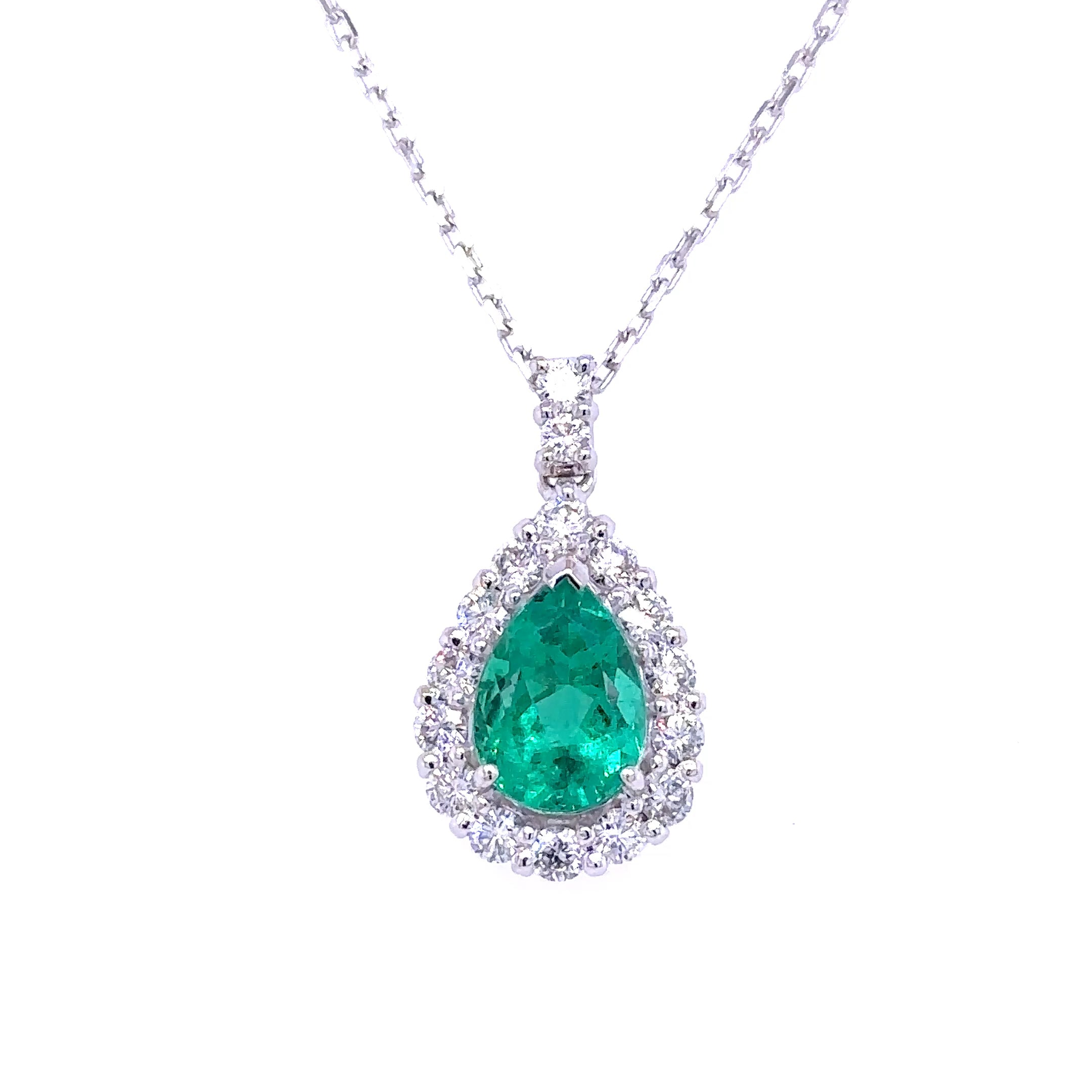
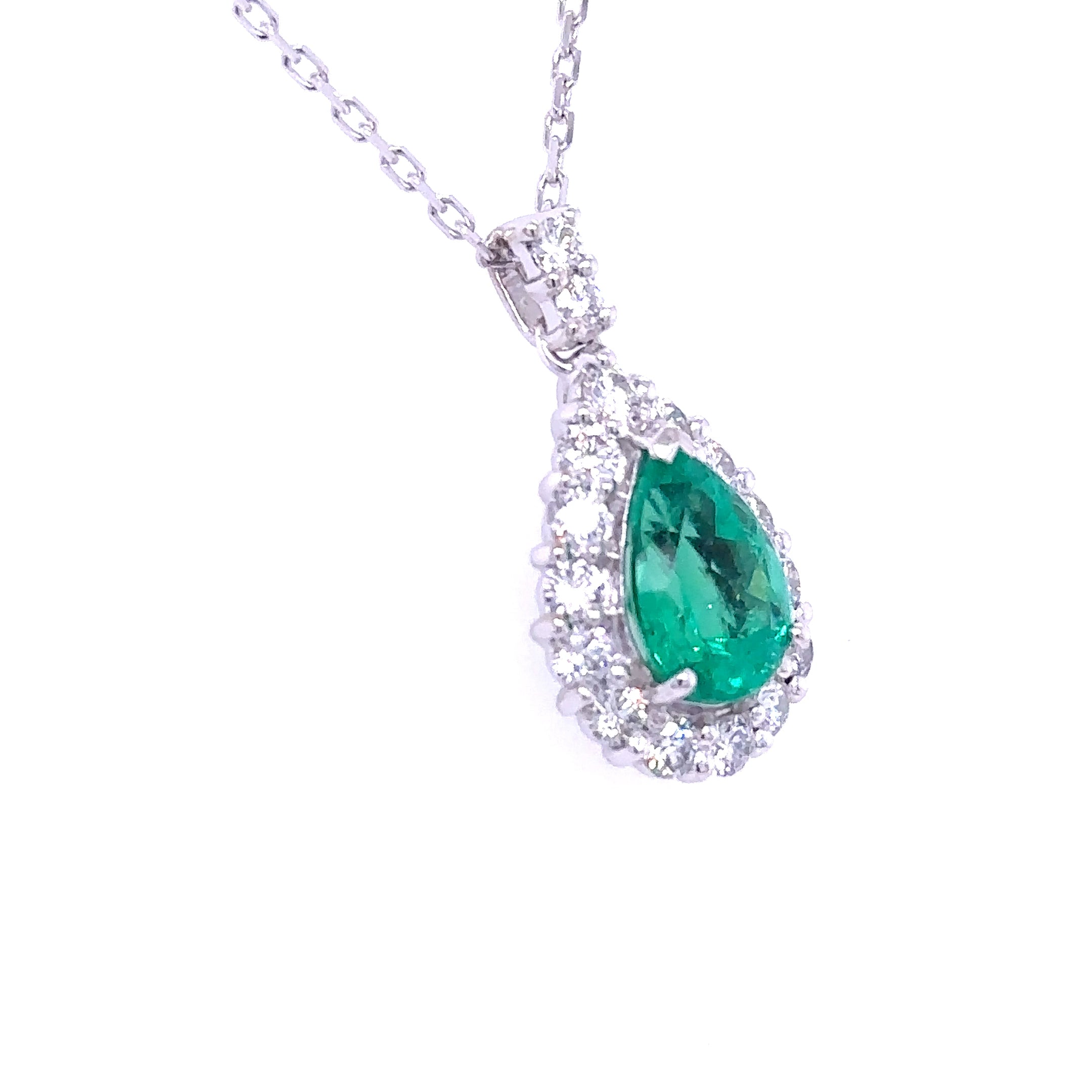
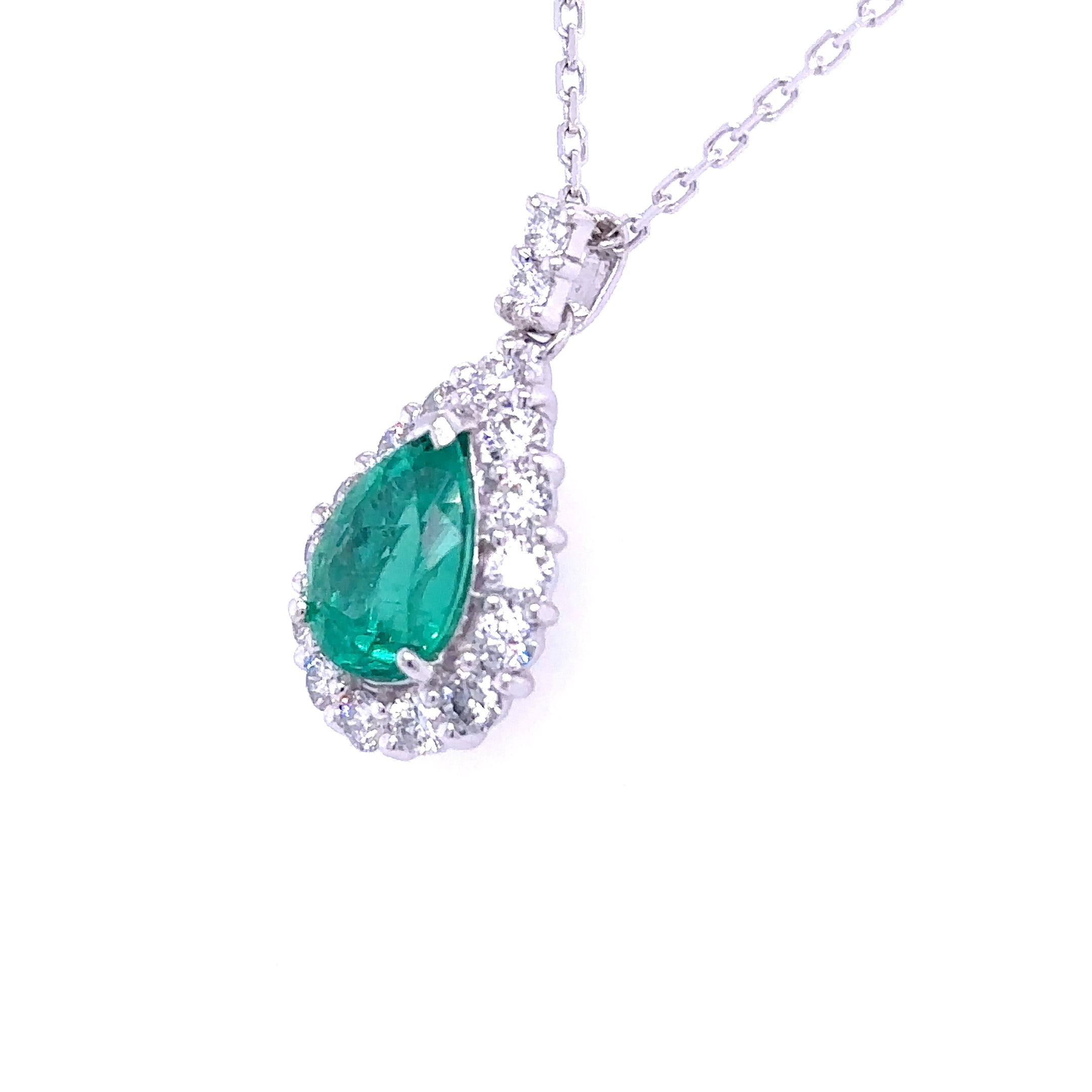
The emerald in this pendant
The emerald in this pendant was examined by the Netherlands Gem Laboratory, part of the Naturalis Biodiversity Center.
The gemological report shows the following:
Report number
E 2520715
Date of examination
August 6, 2025
Main characteristics
• natural emerald (beryl)
• color: vivid bluish green
• cut: pear shape (pear cut)
• dimensions: approx.10.0 × 7.2 × 5.2 mm
• set in a pendant with 16 brilliant-cut diamonds
The main conclusion of the report reads:
“The stone shows characteristics indicating Colombian origin and there are no indications of oil or resin treatment."
Scientific research and certification
The report is signed by J. C. (Hanco) Zwaan, gemologist and researcher at Naturalis.
Dr. Zwaan is the author of several scientific studies on emeralds and other gemstones. His research has been published in Gems & Gemology, the scientific journal of the GIA (Gemological Institute of America.)
These publications cover, among other things:
• emeralds from Zambia
• emeralds from Brazil
• the geology of emerald deposits
His work contributes to a better understanding of the geological origin, inclusions, and characteristics of emeralds.
Dimensions and cut of this emerald
The emerald in this pendant has a pear-shaped cut with a size of approximately 10 × 7 mm.
This size usually corresponds in the gemstone trade to: 2.03 carats
The pear-shaped cut is popular in pendants because:
• the shape elegantly tapers downward
• the stone visually appears larger
• the light plays beautifully through the stone
Comparable emeralds on the international market
To give an idea of the market value, below are some comparable no-oil Muzo emeralds included
• https://merkababeverlyhills.com/shop-merkaba-jewelry/ols/products/2-carat-no-oil-
emerald-design-your-dream-jewel-ideal-for-collectors-merkaba-beverly-hills?
srsltid=AfmBOor_V2n_VmKkVNM_mhOAiuWgqv2LnhUAadz2ZkzhW_DYiPqO6n
Ne
• https://ar.rightgems.com/product-page/6315
• https://www.gempundit.com/products/emerald-gp125761?
srsltid=AfmBOooFJj7G7xsuyWP2p1QqzXriYiUKfezx_Wcze0UCcP07JyszI7Mh
• https://www.rafjewels.com/emerald/exceptional-colombian-emerald-diamond-gold-ring
International price indications for Colombian emeralds
The price of an emerald is influenced by:
• color
• transparency
• carat weight
• origin
• treatment
• certification
Based on international market data, prices for high-quality Colombian emeralds generally between:
$8,000 and $40,000 per carat in stones with outstanding color and transparency.
Sources and references
Scientific publications
• Zwaan, J.C. et al. – Emeralds from the Fazenda Bonfim Region Gems & Gemology (GIA)
• Zwaan, J.C. et al. – Emeralds from the Kafubu Area, Zambia Gems & Gemology
• Zwaan, J.C. – Gemology, Geology and Origin of the Sandawana Emerald Deposits Scripta Geologica / Naturalis
Gemological institutes
• Naturalis Biodiversity Center
• Gemological Institute of America (GIA)