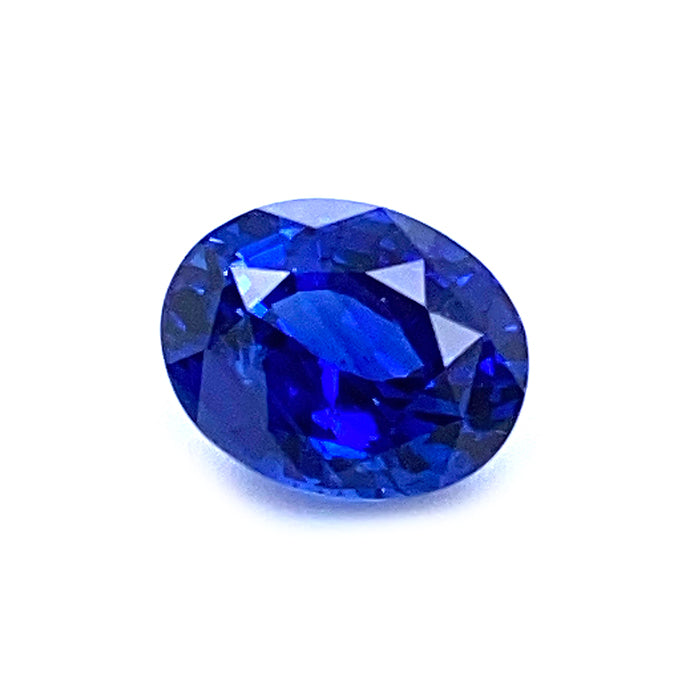
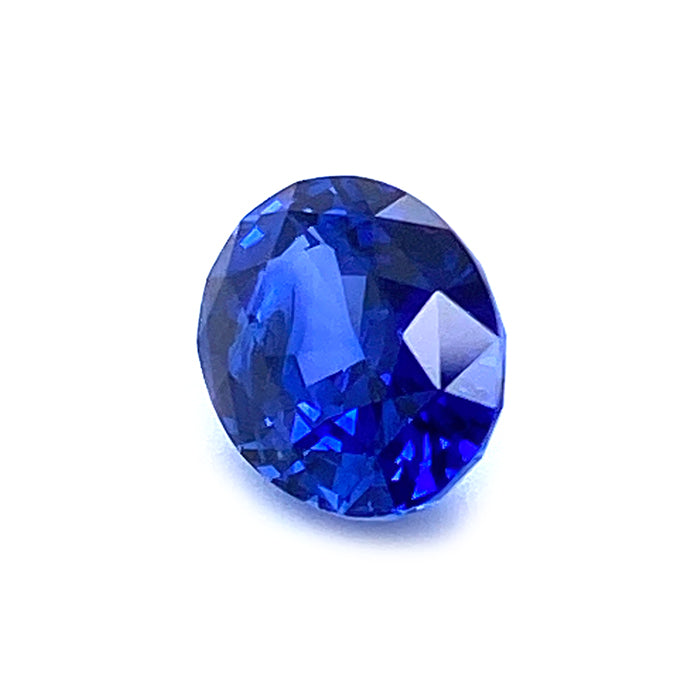
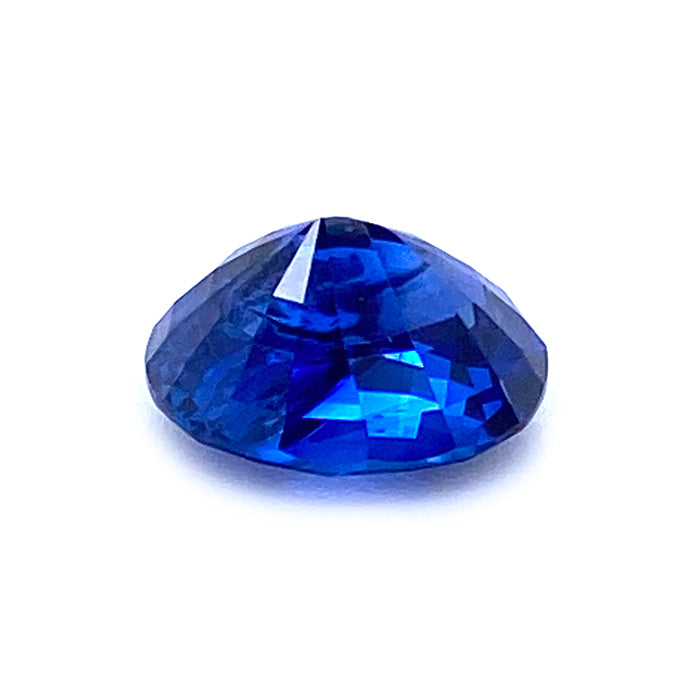
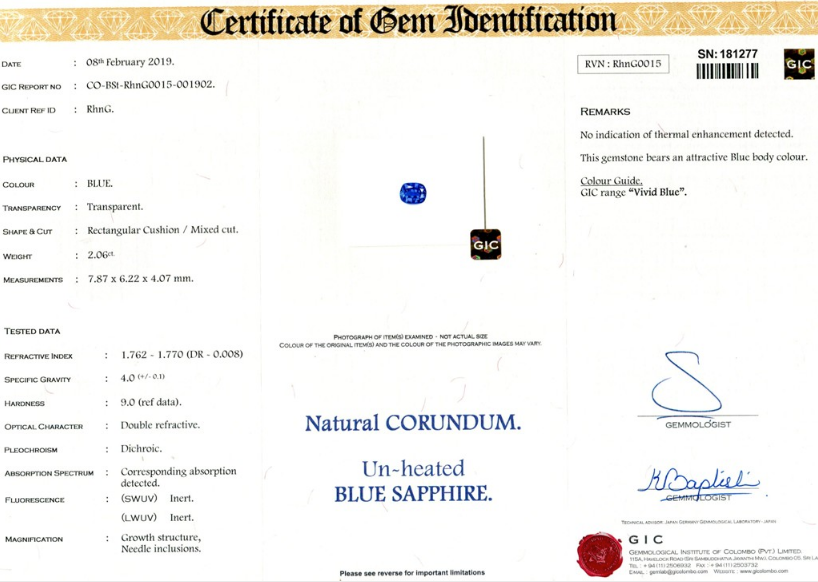
Blue sapphire 2.06 ct
A beautiful natural sapphire with the classic cornflower blue color, weighing over two carats. The stone shows a distinct color zoning that is so characteristic of sapphire. Browse our jewelry for inspiration on how you can have this gemstone set by us into a piece of jewelry of your choice.
Color: Blue
Weight: 2.06 ct
Size: 7.87 x 6.22 x 4.07 mm
Cut: Oval mixed
Origin: Sri Lanka
Treatment: Heated
Certificate: GIC RhnG0015
Product number: 100876
This stone has some inclusions. These indicate a completely natural origin and a heat treatment to improve the color.
This stone is suitable for use in all types of jewelry.
Sapphire
Ruby and sapphire are both color varieties of the mineral corundum. While red corundum is known as ruby, all other colors of corundum are called sapphire. Traces of elements such as vanadium, iron, chromium, and titanium are responsible for the wide color palette that characterizes sapphire.
Sapphire is derived from the Greek word "sappheiros," meaning “blue stone,” and occurs in blue and pink colors. The most expensive and sought-after colors are royal blue, padparadscha (light pink/orange), and cornflower blue. Sapphire should neither be too light nor too dark. Blue sapphires look best in daylight but almost always show pure blue under various types of artificial light.
In certain cases, small inclusions can give some blue sapphires a velvety appearance, further enhancing the beauty and value of these stones. The deposits discovered around 1880 in Kashmir, for example, produced stunning rare blue sapphires. By around 1930, these mines were largely depleted. The padparadscha sapphire is just as popular and rare as the Kashmir sapphire. This sapphire color must simultaneously combine 40 to 60 percent pink and 40 to 60 percent orange tones. Such untreated natural sapphires fetch record prices among collectors.
Unfortunately, they are often confused with inferior padparadscha sapphires that have obtained this color through heating and chemical additives.
There are also green, yellow, orange, and bright neon pink or purple sapphires, which also fall into the expensive segment. Current mining areas are located in Sri Lanka, Australia, Cambodia, Kenya, Laos, Madagascar, Nigeria, Tanzania, and Vietnam.
In summary, sapphires are among the best-known, most sought-after, and most expensive colored gemstones in the world. A timeless gemstone with high potential for value appreciation.
Informatie over de