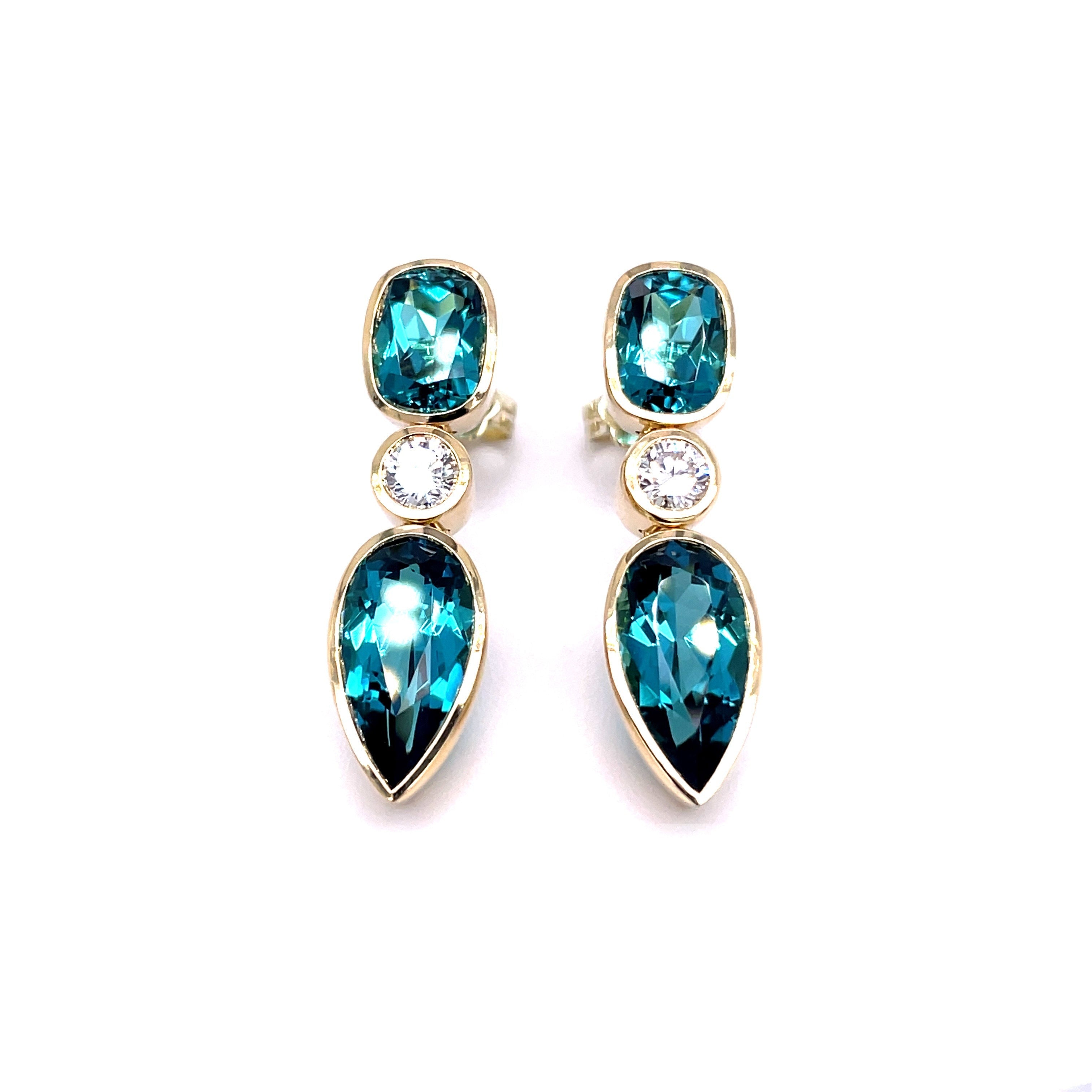
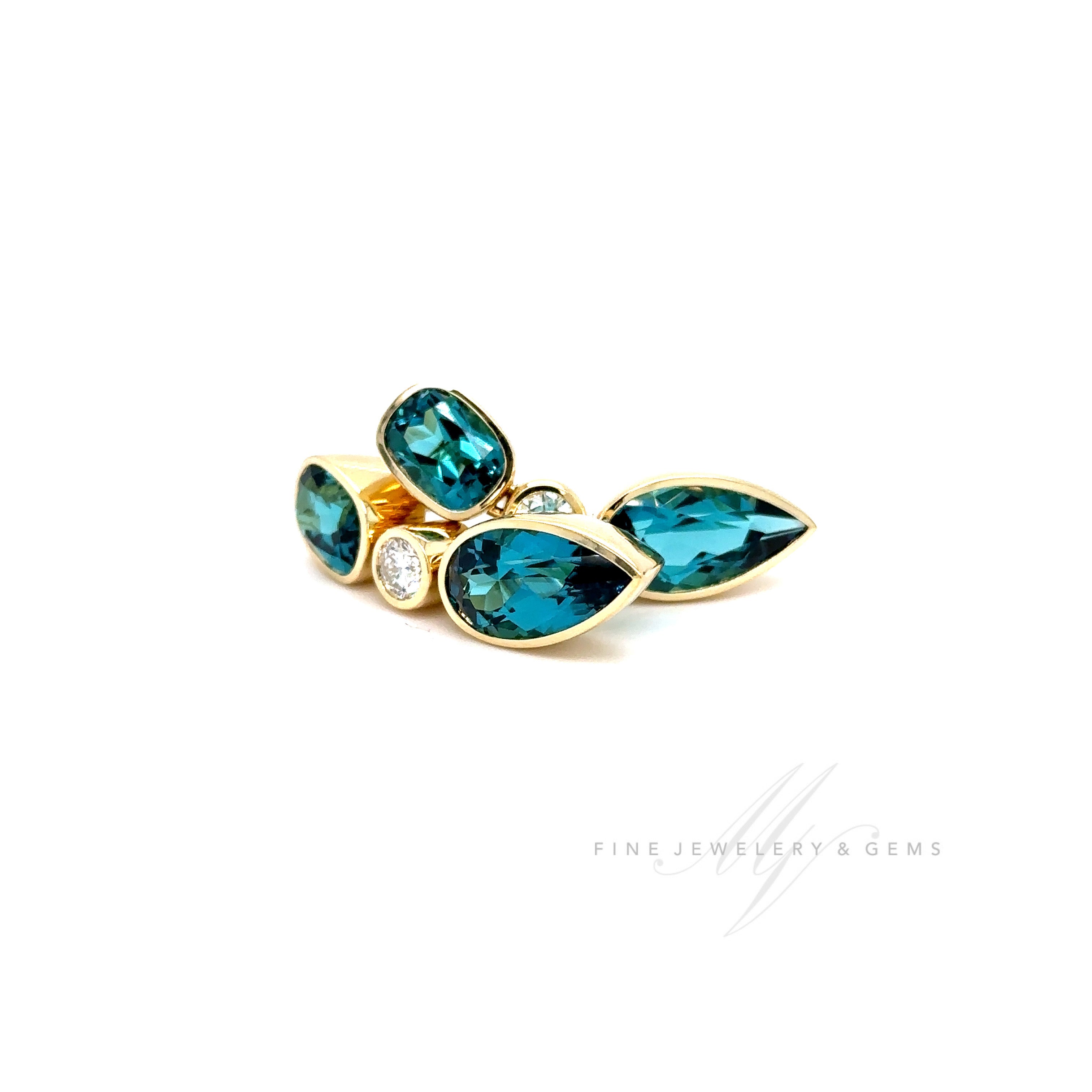
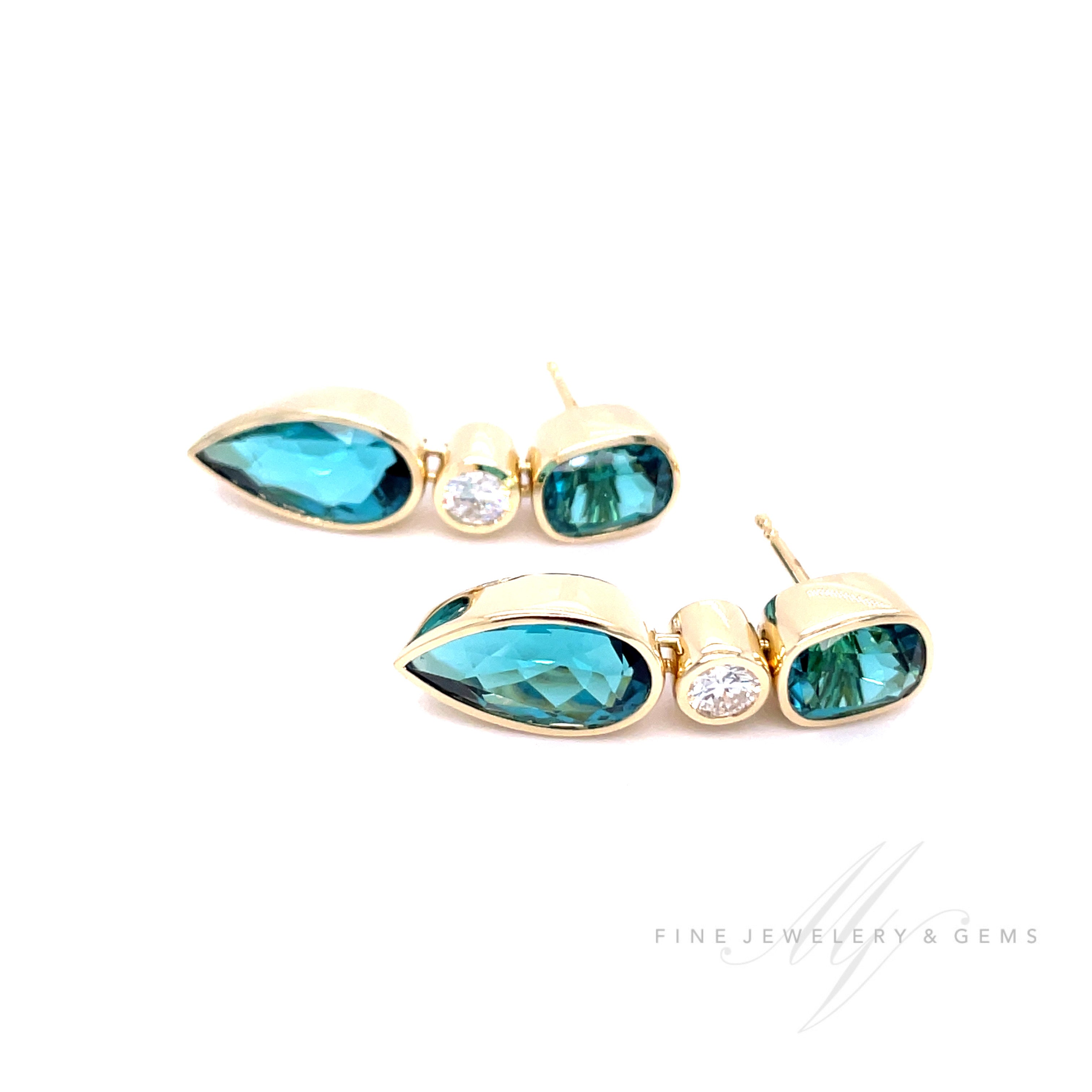
18kt yellow gold stud earrings set with indicolite tourmaline & diamonds
These handcrafted 18kt yellow gold stud earrings are set with indicolite tourmalines & diamonds.
Has this piece already been sold or is it not quite your style? Then choose a gemstone from the extensive collection of unique gemstones and let us custom-make the perfect piece of jewelry for you.
Material: 18 karat yellow gold
Stones:
Indicolite Tourmaline totaling 2.75 ct (2x).
Color: Green/Blue
Weight: 2.75 ct
Size (mm): 13.55 x 7.06 x 4.98
Cut: Pear
Origin: Namibia
Treatment: None
Indicolite Tourmaline of 1.53 ct.
Color: Green/Blue
Weight: 1.53 ct
Size (mm): 8.08 x 5.97 x 4.36
Cut: Cushion
Origin: Namibia
Treatment: None
Indicolite Tourmaline of 1.56 ct.
Color: Green/Blue
Weight: 1.56 ct
Size (mm): 8.06 x 5.99 x 4.34
Cut: Cushion
Origin: Namibia
Treatment: None
Diamond totaling 0.46 ct (2x).
Weight: 0.46 ct
Color: E
Clarity: VVS1
Cut: Brilliant cut
Design: MV
Product number: 9201090701
Tourmaline
Tourmaline is the ultimate colored gemstone. All colors occur, and tourmaline is especially known for its multicolored gemstones. The material was first described after Dutch merchants brought it from Sri Lanka in the early 18th century. They called it "Asschentrekker" because when heated it becomes statically charged and attracts and then repels dust particles, which fascinated the sailors. The Sinhalese term “Toramalli,” from which the name is clearly derived, refers to the color of the material.
The mineral elbaite (named after the Italian island Elba) is the most prominent member of the tourmaline gemstone group and the most commonly used as a gemstone.
Because the tourmaline family includes over 30 species, this is not practical for jewelers. They name tourmalines based on their color. Green tourmaline is called verdelite, red tourmaline rubellite, and dark blue indicolite. The Paraiba tourmaline (elbaite with traces of copper) holds a special position as a rare turquoise blue variety. Additionally, chrome tourmaline is recognized as a separate variant. These are special bright green stones of the dravite tourmaline type colored by chromium and vanadium.
Tourmaline has very strong pleochroism (two-color effect). This must be taken into account when cutting. Also, the color of tourmaline can strongly react to different types of light. Tourmaline generally looks best in daylight.
Tourmaline as a mineral is common. However, bright colors are rare. Gem-quality material used to come mainly from Brazil and California. Nowadays, more sources are known. The richest production comes from Afghanistan and Pakistan, Madagascar, Namibia, and still Brazil. Where tourmaline was somewhat looked down upon 40 years ago, the discovery of spectacular Paraiba and chrome tourmalines has brought much change.
The appreciation for high-quality tourmaline has increased enormously in recent years. As with many other gemstones, it is becoming increasingly difficult and expensive to mine tourmaline, causing prices to rise. In this respect, high-quality large tourmaline stones are an interesting investment with high potential for value appreciation.
Informatie over de